
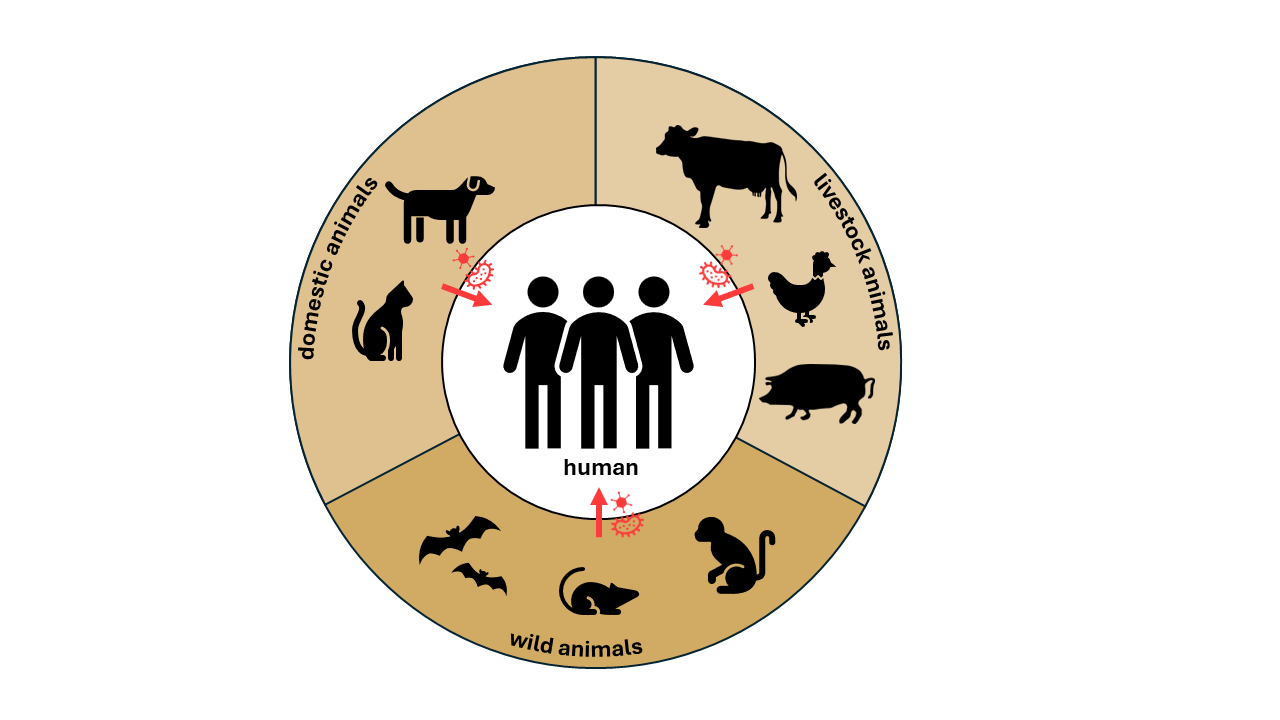
Animal to human disease transmission is a cause of numerous pandemics, epidemics, and severe illnesses we have seen throughout history. These diseases are zoonotic and make up around 60% of emerging human infections. The transmission process, known as zoonosis, can occur bidirectionally and through vertebrate animals, often from a wide variety of wildlife and livestock. Zoonotic pathogens can be bacteria, viruses, fungi, parasites, and prions, which are not viruses or living cells, but rather infectious proteins. Zoonosis has a serious impact on human health worldwide as it causes over 2.4 billion cases of illness and 2.7 million deaths per year.
To better understand the long-standing impact of zoonotic diseases, examining historical examples provides valuable in-sight into how animal-to-human transmission has shaped hu-man health. Looking back, malaria and rabies were some of the first ever described zoonotic diseases in written text. Neither Plasmodium parasites nor Anopheles mosquitoes were identified as the cause and transmission vector of malaria until the late 1800s. As a result, early writings on malaria did not describe the disease as a zoonotic disease. The emergence of the disease, however, dates to 2700 BCE. Ancient medical writings in China, Greece, and Rome describe characteristic symptoms of malaria and reference medicines that are still used today as antimalarial drugs. In 1930 BCE, Babylonia, excerpts from the Eshnunna Code describe the link between the bite of a rabid animal and human death, specifically noting dogs and emphasizing the need for caution in their domestication and ownership. Malaria and rabies were described very early on in human history yet continue to cause modern illness to this day.
While early zoonotic diseases were documented individually, later outbreaks demonstrated how animal-borne pathogens could reshape entire civilizations. The Bubonic Plague is a very well-known event in history that is associated with zoonotic disease. Caused by the bacterium Yersinia pestis, and transmitted through rodents, this zoonotic disease has been identified to be the cause of three plagues in history: the Black Death in Europe in the 1340-50s, the Justinianic plague in the Byzantine Empire in 540 CE. It was even traced back to the Bronze Age and was responsible for the plague that swept across Eurasia 5000 years ago, making it another example of ancient zoonotic diseases.
As microbiology advanced during the 1800s, researchers gained a deeper understanding of infectious diseases with animal reservoirs or animal-associated transmission, including tuberculosis (TB), ringworm, and salmonella. The mycobacterium tuberculosis bacterium responsible for causing TB was identified by Robert Koch in 1882, but when delving into history, it is yet another ancient disease. The first documentation describing TB was over 3000 years ago in India, but it is theorized an early ancestor of the bacterium infected hominids millions of years ago, making it one of the oldest infectious diseases in human history. Ring worm, despite the name, is caused by a fungus. It was discovered in the 1830s, through microscopic observation, but is another disease that was described in ancient texts in Rome and India. Salmonella is commonly associated with food poisoning linked to raw eggs and contaminated poultry, but these bacteria can also be transmitted through other food-producing animals, including cattle and swine. Certain species of Salmonella can cause typhoid fever, and salmonella infections remain among the most common causes of bacterial food-borne illness world-wide.
In addition to bacterial and fungal zoonoses, the 20th century saw the emergence and recognition of viral zoonoses such as avian influenza or “bird flu”. The first documented human infection was in 1997 but was identified as the cause of “fowl plague”, i.e. disease in poultry, in 1955. Ebola was also discovered in 1976, when it caused two outbreaks in Northeastern and Central Africa. The virus is believed to originate from animal reservoirs, likely bats, with trans-mission occurring through contact with infected wildlife. It made a reappearance as a devastating epidemic in Central Africa in 2014-2016.
Building upon these historical patterns, zoonotic trans-mission remains a major public health concern in modern society. Humanity’s most recent experience with a zoonotic disease was through the COVID-19 pandemic. Caused by a specific coronavirus, SARS-CoV-2, the first case occurred in 2019. Although originating from a horseshoe bat in China, human-to-human transmission led to a global spread of the diseases leading to a worldwide pandemic.
Beyond historical examples, it is important to examine the underlying factors that contribute to the emergence and spread of zoonotic diseases. Contributing factors can include anything from climate change, animal migration, animal product trade, travel and tourism, or other human activities that drive environmental changes, like urbanization. Major contact with wildlife or livestock has been a primary cause for zoonotic transmission, and people with high exposure through their job, lifestyle, or location are considered are at increased risk for these types of diseases.
Beyond their causes and historical significance, zoonotic diseases are characterized by a wide range of clinical presentations in humans. The specific symptoms are dependent on the type of disease that is contracted. A variety of organ systems can be affected such as respiratory (lung, airway), gastrointestinal (stomach, intestine), neurological (brain, spinal cord, nerves), skin, etc. Many bacterial and viral zoonoses can cause rash, aches, flu-like symptoms such as a fever or fatigue. This includes examples like Lyme disease, dengue fever, and AIDS. Gastrointestinal symptoms consist of abdominal pain, diarrhea, and vomiting, and come from diseases such as the plague and Ebola. Some more severe illnesses, such as rabies or mad cow disease, an extremely rare prion disease, cause neurological symptoms including seizures, hallucinations, paralysis, and memory loss.
Once symptoms appear, appropriate treatment depends on the type of pathogen involved. Many zoonotic diseases are treatable, and medications include anti-pathogen, so antibiot-ics, antivirals, antifungals, antiparasitic medications. Some-times, more severe cases can use monoclonal antibodies to neutralize the pathogens, and in some cases, surgery is used for the removal of manifestations of the disease (example: cysts), such as Ebola or parasitic infections. There are a few zoonoses that are considered fatal or have a high mortality rate, but rabies is an example of one of the deadliest infectious diseases as once symptoms present, survival is extremely un-likely (1% or less).
While treatment is essential, preventing zoonotic trans-mission remains the most effective strategy for reducing dis-ease burden. Vaccination is the most well-known medical preventative measure for many zoonoses. In Canada, the vaccine against SARS-CoV-2 is an example of a widely recommended vaccine against zoonotic diseases. Other infectious organisms such as rabies or Ebola also have vaccines recommended in Canada for high-risk cases. In addition to vaccination, protection from exposure by avoiding contact with infected fluids, bug spray, avoiding animal scratches/bites, and appropriate animal handling are also all methods of prevention.
Disease transmission through animals to humans has been the cause of many historical events, the reason for lifestyle food practices today, and the way we treat domesticated animals. It is a vast categorization of diseases, ranging from treatable illness to severe debilitating or life-threatening conditions. Caused by numerous types of pathogens and trans-mitted through various kinds of animals, these diseases are fascinating products of nature. As most emerging infectious diseases come from animals, zoonosis highlights how human health is dependent on not only the well-being of humanity, but that of animals, ecosystems, and environmental stability.

Alina Mehra
Latest posts by Alina Mehra (see all)
- Outsmarting Viruses: Challenges Behind HIV Vaccine Development - October 5, 2026
- The HPV Vaccine: A Cancer Prevention Success Story Facing Global Access Challenges - October 5, 2026
- Mapping human illness across time through the lens of zoonosis - May 24, 2026

