
In the world of immunology, the human and murine model systems are often viewed as the “gold standard.” As such, we (humans) define a robust immune system by two intricately linked arms: the innate system, which provides rapid, broad-spectrum defense, and the adaptive system, which offers exquisitely targeted responses and long-lasting memory. Conventional wisdom suggests that the coordinated activity of both is essential; to lose one is to invite systemic collapse.
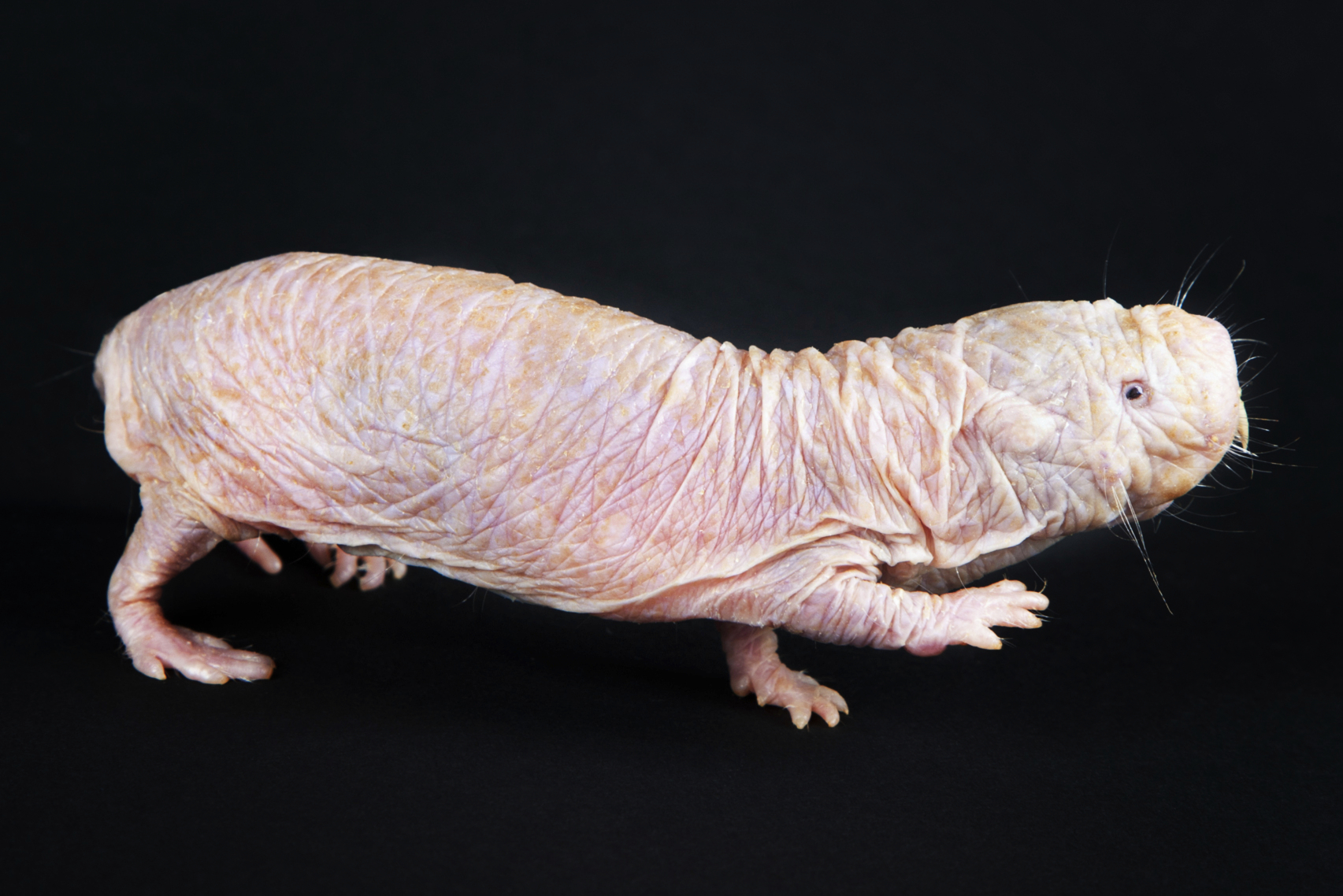
Enter the naked mole-rat (Heterocephalus glaber), a nearly hairless, functionally blind, buck-toothed subterranean rodent. At first glance, their immune system appears strangely pared down compared to that of humans or lab mice. The primary cellular components of the adaptive arm, T cells and B cells, are both much more limited in numbers and variety of repertoire in the naked mole-rat. Their thymus (the source of T cells) shrinks early in life, reducing its capacity for producing T cells in adulthood. Instead of conventional T cells, naked mole‑rats rely heavily on gamma‑delta T cells, an unconventional subtype that may compensate for the near absence of natural killer cells. Their B cells also appear to have highly limited antibody diversity. Otherwise, their immune system is dominated by innate immune cells, with high numbers of myeloid cells, highly inflammatory macrophages, and neutrophils with unique functions. On paper, this looks like a recipe for vulnerability. And indeed, studies show that naked mole‑rats mount relatively weak responses to many viral infections.
Despite this apparent “weakness”, naked mole-rats are astonishingly long-lived compared to similarly sized rodents. Whereas lab mice and rats live up to about three years, naked mole-rats easily live up to three to four decades, defying the typical rules of mammalian aging. So how do naked mole-rats defend against pathogens and live such long lives when they are missing important components of the immune system? This may be due to an evolutionary trade‑off. Naked mole‑rats live in underground colonies that are relatively pathogen poor. In such an environment, the evolutionary pressure to maintain a metabolically expensive adaptive immune system may have been low.
Importantly, this reduced reliance on adaptive immunity might contribute to their longevity. In humans, aging is accompanied by chronic inflammation, immune dysregulation, and rising rates of cancer. Naked mole‑rats seem to sidestep much of this decline. While humans often suffer from immune overreactions that can inadvertently promote tumor growth, naked mole-rats exhibit a dampened immune response to carcinogenic damage. Paradoxically, this “weakness” may be a protective attribute, as it restrains the chronic inflammatory environment that tumors exploit to thrive. When combined with highly robust DNA repair mechanisms and exceptionally low genetic mutation rates, the result is an animal that is virtually cancer resistant. Other changes that accompany the aging process as humans or lab mice age, such as metabolic decline or loss of fertility, also have not been found in aging naked mole-rats.
The naked mole-rat challenges our “more is better” approach to immunology. Despite this, the full picture of how they maintain such a prolonged health span and whether or how their unique immune system contributes to this phenomenon is still unclear. But ultimately, why does this matter? Comparative immunology is critically important to identify which immune features are universal and which are evolutionarily flexible, allows scientists to evaluate the pros and cons of the most commonly used animal models (such as the lab mouse), and identifies immune mechanisms that do not necessarily exist in humans, but could inspire new approaches to treat disease or maintain health in aging.

Annie Pu
Latest posts by Annie Pu (see all)
- Mind the Gap: how overlooking sex compromises research - October 5, 2026
- What the humble naked mole-rat can teach us about immunity - May 24, 2026
- An AI-generated picture worth a thousand words - October 2, 2025

