
The intricate web of organs, cells, and molecules that make up our immune system can be viewed as the product of evolutionary optimization, designed by nature itself. Our adaptive immune system, in particular, is a marvel; it is comprised of B cells and T cells, which recognize specific moieties on pathogens or other agents of disease, allowing for recognition and clearance of the threat, as well as protection against future exposures. These immune cells possess both secreted and cell-surface molecules that allow for identification of their target: antibodies produced by B cells and T cell receptors (TCRs) expressed on T cells. Both antibodies and TCRs belong to the immunoglobulin (Ig) family of proteins.
B cells are our body’s antibody-producing cells and encode in their DNA the ability to generate an extremely diverse repertoire of antibodies. Millions of B cell clones exist, each producing a unique antibody type designed to recognize a specific target. This army of B cells can expand or contract as an individual encounters various environmental factors throughout life. Similarly, a T cell army also exists, where each TCR recognizes a specific target.
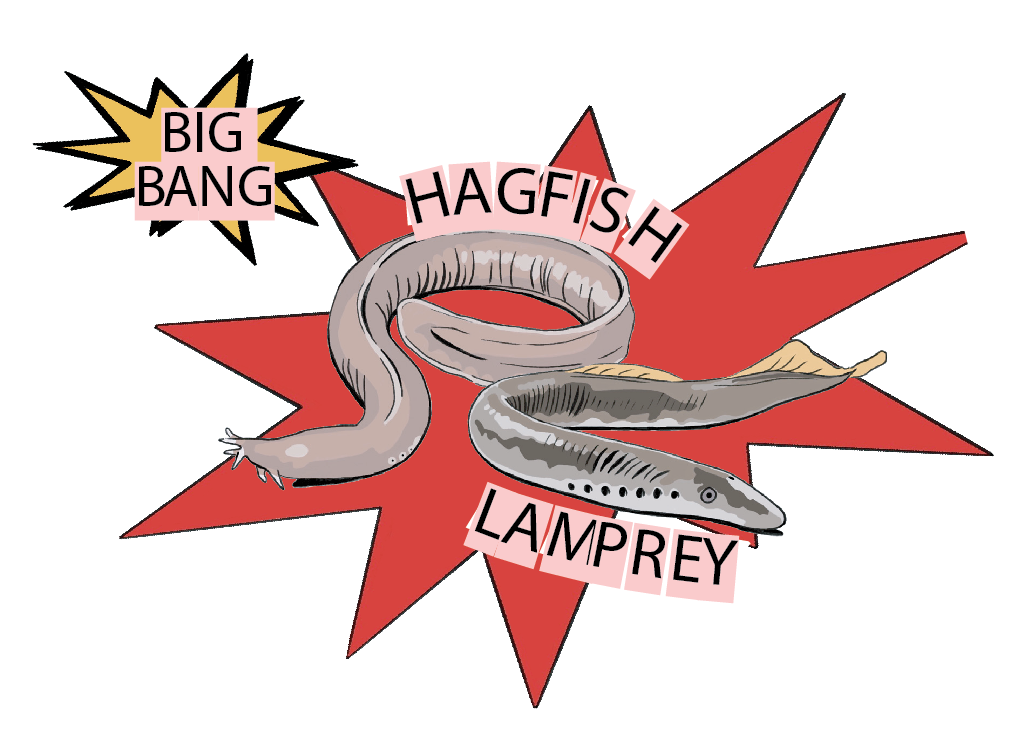
This highly adaptive machinery is ancient, first emerging around 450-500 million years ago in jawed fish – our vertebrate ancestors! Given this relatively “sudden” emergence of a functional adaptive immune system in jawed fish on the evolutionary timeline, which has not changed much over the years, scientists fondly refer to this evolutionary event as the “Big Bang” of the adaptive immune system; the jawed fish possessed all the core adaptive immune machinery found in today’s mammals, but the jawless fish were thought to lack such a system entirely.
The jawless fish, however, had a well-kept secret that was only unearthed relatively recently – the existence of an alternative adaptive immune system, which relied on cells that produced similar molecules to our Igs. Termed the variable lymphocyte receptor (VLR) family, jawless fish also have ingrained in their genome the ability to create a diverse repertoire of these VLR molecules (at more than 1014 unique VLRs) – an army size that can rival the B cell repertoire in mammals. Remarkably, the jawless fish developed an adaptive immune system centred around the VLRs, which although is functionally similar to jawed vertebrates, uses entirely different molecular building blocks. Throughout these millions of years, these two adaptive immune systems emerged and evolved in parallel.
Through studies in lampreys and hagfish, two members of the jawless fish taxon, we have learned a lot about the function of these VLRs in comparison to the mammalian adaptive immune system. Instead of the Ig protein units found in antibodies and TCRs, VLRs consist of various leucine-rich repeat (LRR) components. LRRs are ancient protein components in plants and animals that make up many other molecules of the immune system and can be triggered by an exceptionally diverse array of ligands. There are three types of VLRs: VLRA, VLRB, and VLRC. Cells possessing these receptors have roles analogous to those of T and B cells in jawed vertebrates, allowing jawless fish to recognize and respond to foreign pathogens.
The discovery of these alternative immune molecules has potential applications in biotechnology. Antibodies have been engineered to not only target infectious microbes, but also to target other disease-causing proteins and macromolecules within our bodies. Since jawless and jawed fish diverged millions of years ago, VLRs have an advantage of recognizing molecular targets that mammalian Ig-based antibodies struggle to recognize, notably carbohydrates. The unique shape and structure of these molecules also allow for further fine-tuning of their targeting capabilities.
These VLRs are, therefore, an excellent example of convergent evolution in immunology; while excluded from the immunological “Big Bang” that brought about the adaptive immune
system in jawed fish, the jawless fish strike back with their own unique VLR solution that can achieve a similar functional outcome. Uncovering the biological secrets of these unusual immune receptors will not only deepen our understanding of immune system evolution, but may also unlock new tools in biotechnology and medicine.

Latest posts by Deeva Uthayakumar (see all)
- Immunocontraception — Harnessing immune cells for social equity? - October 5, 2026
- VLRs: the jawless fish strike back! - May 24, 2026
- The inseparable nature of art and science: Does the “Renaissance man” still exist today? - October 2, 2025

