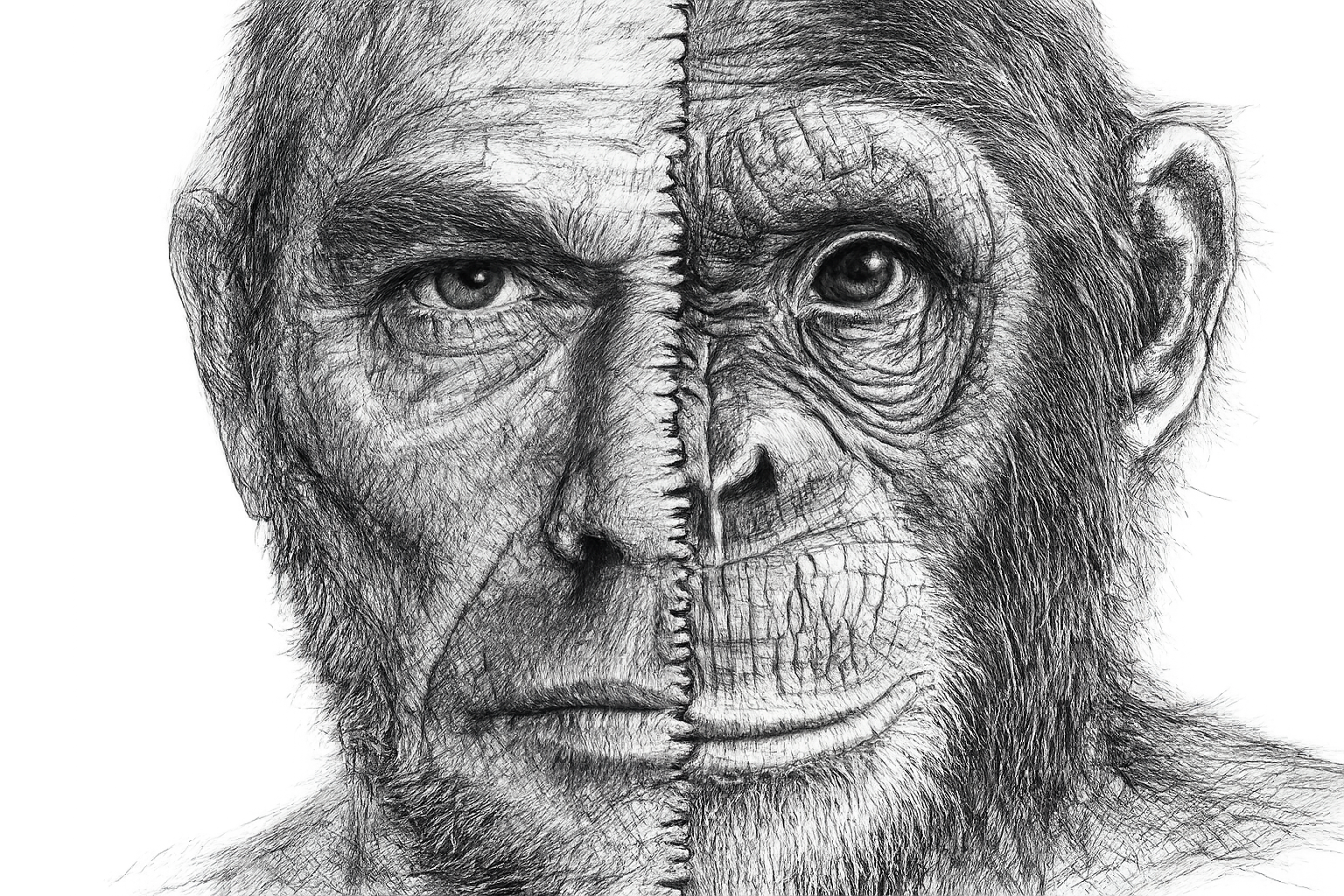
Non-human primates (NHPs) occupy a unique niche in biomedical research. The earliest documented scientific use of primates takes us back to the United Kingdom in 1698, when the Royal Society commissioned the first dissection of a juvenile chimpanzee for studies in comparative anatomy. Research on NHPs over the past 328 years has since led to medical advances in many fields, including vaccination, neurobiology, neonatology, and drug development.
NHPs can be broadly divided into Old World monkeys, including macaques, and New World monkeys such as marmosets, the latter of which are native to the Americas. While New World monkeys are sometimes useful to model the biology of specific diseases, Old World monkeys have been the most used species in biomedical research. As the theory of evolution be-came more widely accepted in the late 1800s, scientists became motivated to study biology in species perceived as ‘distant cousins’ of humans. Their motivations were well-founded. In 1908, the first experiments inoculating macaques with tissue from a child who had succumbed to a paralytic death led to the discovery of the poliovirus. This established the virology of polio and set the stage for the eventual eradication of the virus through vaccination.
The value held by Old World monkeys in biomedical re-search comes from our shared evolutionary origin. NHPs are a rare pre-clinical species that exhibit cross-reactivity to hu-man therapeutic antibodies. This is mainly due to structural similarity between therapeutic targets. This similarity be-comes particularly useful in research when designing therapies against pathogens that interact with human proteins in unique ways. As such, establishing NHP models of infection led to the successful discovery of a certain yellow fever vaccine, translated to human use in the late 1930s. This discovery later earned Max Theiler the 1951 Nobel Prize in Physiology or Medicine for his work developing a vaccine against yellow fever, the first Nobel Prize awarded for the development of a vaccine against a viral disease.
NHPs have since become critical for their use in under-standing virus pathogenesis in cases where human trials are unethical. Old World macaques are the standard model for understanding pathogenesis of the simian immunodeficiency virus (SIV) and the Ebola virus, and for testing vaccines that protect against the insidious diseases they cause. This has proven useful in scenarios involving global biomedical crises – success of the Moderna and Pfizer/BioNTech COVID-19 vaccines in rhesus macaques enabled rapid clinical translation during the 2019–2022 pandemic. So close are our primate cousins to us on the evolutionary tree that we even share similar blood. The study of rhesus macaque blood takes the credit for the discovery of the Rh+ blood group system, our understanding of which enables lifesaving blood transfusions.
Evolutionary proximity to humans also allows for the use of NHPs to understand neurobiology. Like us, primates have a prolonged neurodevelopmental period, which gives rise to complex social behaviour, fine motor control, and similarly organized neuronal circuits. In 1976, a 23-year-old chemistry graduate student in the United States synthesized and ingested an illicit drug that triggered the onset of a Parkinson’s-like disease within days. Researchers later discovered that the compound, ‘methylphenyl-tetrahydropyridine’, could trigger Parkinsonism in macaques. The later use of this model to test experimental deep brain stimulation therapies led to the approval and adoption of the latter as a standard of care. These therapies have also replaced neurosurgery that involved destroying large regions of brain tissue with a more conservative approach, improving patient quality of life.
The intricacy of the primate brain spurred its popularity as a model in 20th century cognitive neuroscience. Famous experiments on maternal-child attachment by Harry Harlow helped establish the concept that maternal bonding is driven by comfort and sensation rather than only through feeding. Behavioural studies on primates initially aimed to understand complex human traits. These provocative experiments notoriously captured public attention when they claimed that apes were able to learn, understand, and communicate in sign language. This was particularly shocking, as it argued that the human-primate divide was thinner than ever imagined. How-ever, Herbert Terrace’s later analysis of the American chimpanzee ‘Nim Chimpsky’ later refuted these findings. They in turn revealed that much of the apparent sentence-like signing that these animals were using instead seemed to reflect imitation, learned interpretation of cues from trainers, and very limited grammar, rather than true human-like language. Notably, these findings taught us to account for the unnoticed influence of controlled, human-imposed conditions on NHP behaviour. Large monkeys are often housed in confined spaces, which may not allow them to behave naturally. Controlling them by physical restraint can also convolute behavioral inferences by inducing psychological distress. The discovery of cognitive processing in NHPs and the remarkable behavioural similarity they bear to humans eventually also raised challenging ethical questions about their usage. If our primate cousins resemble us behaviourally, can it be conscionable to use them for psychological experimentation, especially those involving psychological suffering?
The imposition of ethical restrictions taking this into con-sideration began in the late 1990s to restrict NHP research. Today, primate work is concentrated in highly specialized centres. In Canada, NHP research is notably limited, with the Canadian Council on Animal Care (CCAC) reporting only 6,818 NHPs used in 2021, representing less than 0.2% of all research animals. Scientific necessity for the use of NHP models is distinct from other animal models. Investigators must make a strong case to justify the experimental usage of NHPs over other small animal models.
Of particular interest today is the use of NHPs for the study of neuroimmunological diseases, since most of these diseases have no viable treatment options and represent a growing threat to the aging population. Rodents provide limited insight into the true triggers of these diseases, which are thought to be accrued with lifetime exposure to inflammatory stimuli. The common marmoset has become especially attractive in this area, as it naturally accumulates toxic proteins with age that also appear in humans. Similarities in the pathogenesis of brain diseases have thus led to the establishment of a chronic experimental model in marmosets that closely resembles hu-man multiple sclerosis compared to existing models in rodents. The smaller size of these monkeys makes them easier to house and more cost-effective than their Old-World counterparts. Uniquely, marmosets are more frequently born as dizygotic twins with natural hematopoietic chimerism. This genetic similarity allows for the one-of-a-kind use of these monkeys for matched-pair immune cell exchange studies without the unwanted rejection of transplanted cells.
NHPs also share natural cognitive de-cline trajectories and age-associated neuropathology with aging humans. This is not observed in rodents. Aged marmosets also show comparable decline in brain immune cell functions with age, suggesting complex effects of lifetime pathogenic insults (and associated immune action) on the aging brain. Immunological aging in primates also mimics humans in terms of increase in low-grade systemic inflammation and loss of naïve adaptive immune cell reserves. NHPs are abundant in lifelong latent herpes viruses, which are thought to trigger several neurodegenerative diseases in humans. While these are known to relate in humans, whether they do so in NHPs, and how this might be therapeutically manipulated is yet to be understood.
The modern primate researcher thus holds the ability to ask questions of unusual scientific power while bearing great ethical responsibility. The evolutionary proximity which makes NHPs so valuable for modeling human immunology, neurobiology, and aging is also what demands their most careful and justified use. What will our primate cousins teach us next about human disease?

Jonathan Monteiro
Latest posts by Jonathan Monteiro (see all)
- Sex Differences in Osteoimmunology - October 5, 2026
- The Delicate Immunology of the Testes - October 5, 2026
- Primates: Better Models for Human Disease? Opportunities and Challenges - May 24, 2026