Dr. Juan Carlos Zúñiga-Pflücker, Chair, Department of Immunology, University of Toronto I trust that IMMpress Magazine’s first issue of Volume 8 reaches you in good health and doing well, as...
Dr. Anh Tran completed her postdoctoral fellowship in Prof. Tania Watts’ laboratory, where she investigated the role of microRNAs in T cell survival. Currently, she holds the title of Research...
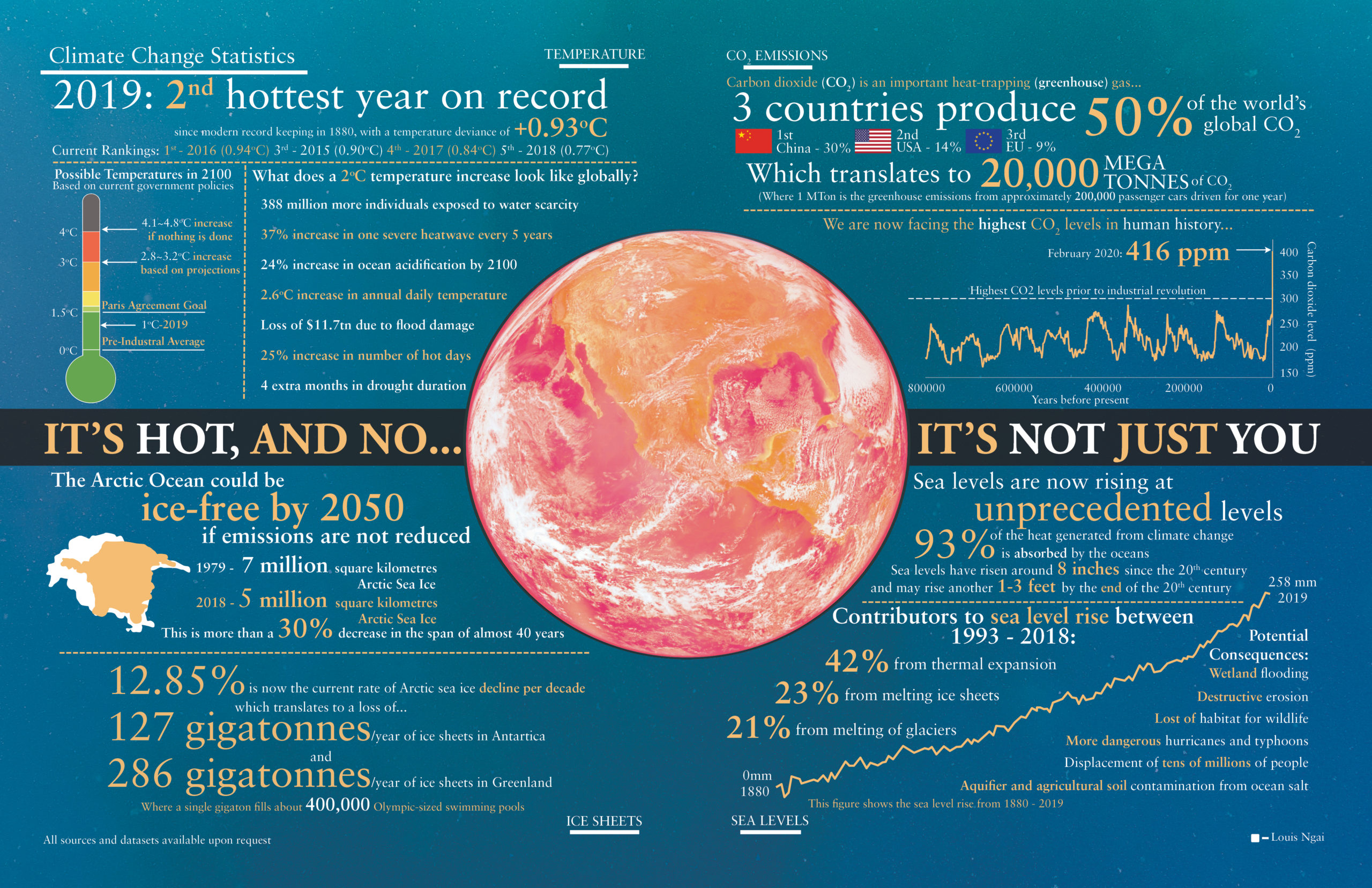
As we enter 2020 and look at the past decade, it is obvious the world is changing. The 2010s held the hottest years on record, severe storms and an ever-rising...
Introduction The average temperature on the planet has risen almost 1°C since the late 19th century, with the majority of the warming occurring in the past 40 years. This seemingly...
Beyond Meat has led a movement for creating plant-based meats to satisfy the ‘meat craving’ for those wishing to reduce or opt out of animal product use. The company, founded...
The World Health Organization (WHO) cites climate change as “the greatest threat to global health in the 21st century.” Direct effects include respiratory complications from increasing allergens and air pollution,...
Climate change has shifted Earth’s topography to unimaginable lengths, changed political relations, and seeped into social discourse with the global climate strikes in 2019. Why have environmental messages failed in...
The consequences of human activity on the environment are clear. Global temperatures are rising, ecosystems are being destroyed, and species are going extinct. Despite the efforts of world leaders and...
Incorrect recycling practices have far worse consequences than consumers typically expect. The critical issue begins when non-recyclable materials are mixed with recycling. A striking 30% of what consumers dispose into...