Brain drain is a term coined in the 1950s to describe the emigration of highly skilled personnel, particularly physicians and scientists, from Great Britain to the United States and Canada...
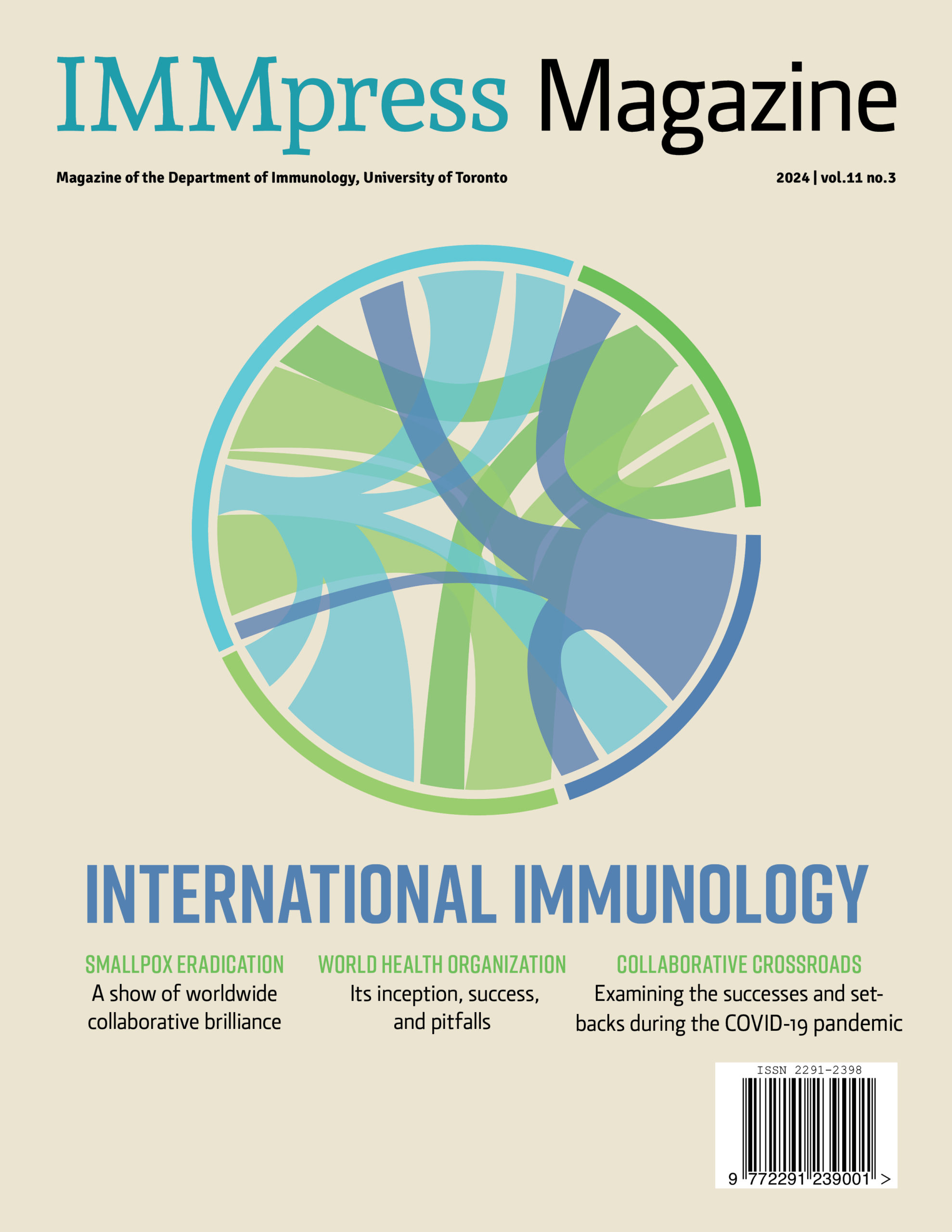
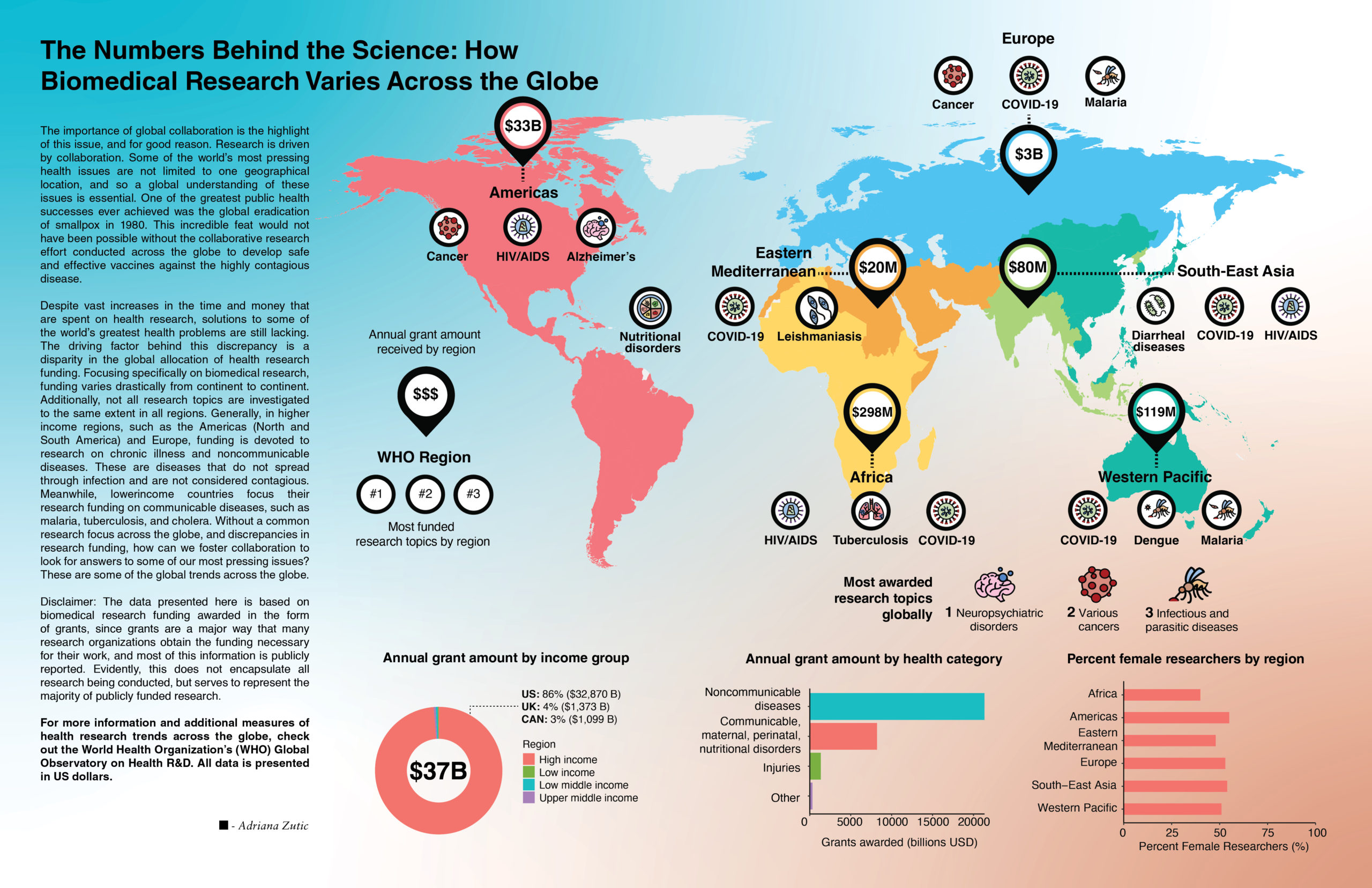
The concept of international collaboration invokes the greatest ideals of science: working together on global issues, aligning the agendas of diverse groups, and developing a more robust understanding of the...
“Immunology has always fascinated me. Its complexity presents a challenging yet stimulating area of study. Additionally, the direct impact on healthcare and the potential to improve motivates me greatly,” says...
In order of left to right: James Pollock (Co-Editor-in-Chief), Kitty Liu (Design Director), Karen Yeung (Co-Editor-in-Chief), and Tianning Yu (Social Media Coordinator) Immunology, by its nature, knows no geographical boundaries....
Jen Gommerman, PhDCanada Research Chair in Tissue Specific ImmunityProfessor and Chair, Department of Immunology “Doing science with care and humility is a powerful act of reciprocity with the more-than-human-world.” Robin...
Small but mighty, mitochondria are double-membraned organelles that generate energy for our cells and power biological processes that keep us alive. These potent bodies of energy received its famous name...
Mitochrondrial replacement therapy (MRT), often referred to as “3-person in-vitro fertilization (IVF),” is a technology that combines the mitochondrial DNA (mtDNA) of a donor with the nuclear DNA of a...
The word “immunity” conjures up an image of our body fighting against infections. We picture our immune cells heroically battling against foreign, unwanted substances – viruses and bacteria – that...