Cancer is often described as a uniquely human tragedy. But it isn’t. Cancer affects nearly every class of vertebrate and is especially common in mammals. It is, in many ways, a universal biological problem; a consequence of what it means to be multicellular.
Every cell in your body is part of an extraordinary co-operative society. Cells build tissues, generate energy, divide when needed, repair damage, and communicate constantly to maintain homeostasis. These biochemical networks are so intricately connected and precisely regulated that it almost seems miraculous they function flawlessly at all. Until they don’t.
Across one’s lifespan, billions upon billions of cellular re-actions take place. DNA is copied, proteins are built, signals are transmitted. With so much happening, the real question is not if something will go wrong, but when. Genetic mutations accumulate. Metabolic errors occur. Environmental exposures leave their mark. Over time, these small changes can corrupt the machinery that keeps cells behaving properly.
When a cell begins to malfunction, the body has safeguards. Cells can trigger a “self-destruct” program known as apoptosis, sacrificing themselves for the greater good. If that fails, the immune system acts as a vigilant patrol, identifying and eliminating abnormal cells before they become dangerous. But cancer cells are, in a sense, evolutionary escape artists. If they acquire the right combination of mutations, they can evade these surveillance systems. They multiply, accumulate further mutations, hijack nutrients, and outcompete their neighbouring healthy cells. What began as a single rogue cell becomes a tumor.
Mutations build up with age, which is why cancer risk increases over one’s lifetime. Additionally, the more cells an organism has, the greater the opportunity for one of them to go rogue. Larger bodies mean more cells and longer lifespans mean more time for mutations to accumulate. By that logic, the largest, longest-living animals on Earth should be riddled with cancer, but they aren’t. This contradiction is known as Peto’s Paradox, formulated by epidemiologist Richard Peto in 1977. The paradox asks a simple yet profound question: if cancer arises from mutations in cells, and larger animals have far more cells dividing over longer lifespans, why don’t they experience astronomically higher rates of cancer?
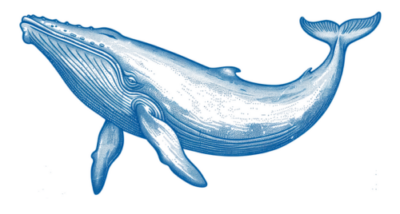
Consider a mouse. A mouse has far fewer cells than a human and lives only two to three years. By all reasoning, its cancer risk should be dramatically lower than ours. Yet mice develop cancer at rates comparable to humans. Now consider whales. Their bodies contain 1000 times more cells than humans and can live for over a century. If cancer risk scaled with cell number and lifespan, whales should be over-whelmed by malignancy, yet they are not. In fact, whales ap-pear to have a much lower cancer risk compared to humans. How is this possible? Did whales simply get lucky in the evolutionary lottery? Or have they developed biological defenses that far surpass our own? Researchers have proposed several intriguing theories.
Theory 1: Redundancy of tumor suppressor genes
One leading explanation is surprisingly straightforward: whales may simply be better equipped at preventing cancer in the first place.
Tumor suppressor genes act as their name suggests – they prevent tumors from developing by controlling cell growth, repairing damaged DNA, and triggering apoptosis when cel-lular damage becomes too severe. In humans, when these genes fail or mutate, cancer risk rises dramatically. In large, long-lived animals, relying on a single protective pathway would be risky. One proposed solution is genetic redundancy: the idea that whales may possess additional or function-ally overlapping tumor-suppressing mechanisms that act as biological “backup systems.” If one pathway fails, another can compensate. For example, researchers have identified 71 duplicated tumor suppressor genes in cetaceans (whales, dolphins, porpoises), which are involved in anti-cancer processes such as DNA repair, metabolism, apoptosis, aging and cellular senescence. Thus, genetic mutations in one gene would not collapse the entire tumor suppression mechanism. Should one gene fail to control a cancerous cell, another redundant gene can step in to suppress it. In other words, whales may not avoid cancer by chance, they have evolved more robust systems for maintaining genomic integrity from the start.
Theory 2: Hypertumors
Cancer cells are inherently competitive. Unlike normal cells, which cooperate to maintain tissue function, cancer cells prioritize their own proliferation. One hallmark of tumor growth is angiogenesis, the recruitment of blood vessels to supply oxygen and nutrients. This vascular network supports continued tumor expansion.
Some researchers have proposed the concept of hypertumors, tumors that arise within existing tumors. This hypothesis proposes that, as cancer cells continue to accumulate mutations, an individual cell within a growing tumor acquires changes that cause it to diverge from the main tumor population. Rather than remaining part of a coordinated mass, this mutated cell establishes its own proliferative focus and begins competing for the same blood supply. By redirecting nutrients and oxygen toward itself, it deprives neighbouring tumor cells of resources, ultimately starving and killing the original cells. In essence, cancer is killing cancer.
In large organisms such as whales, tumors would require a prolonged period to reach a size capable of compromising the host. This extended timescale may allow such internal competition to emerge, effectively constraining tumor expansion before it becomes lethal. In contrast, in smaller organisms, tumors can reach life-threatening size more quickly, leaving insufficient time for this type of internal resource competition to significantly alter the outcome.
While these hypotheses offer plausible mechanistic explanations to Peto’s paradox, they are not without limitations. Large-bodied animals have evolved independently over the course of history, meaning different lineages may have developed distinct, rather than universal, anti-tumor mechanisms. A strategy observed in whales may not necessarily apply to other large-bodied animals. In addition, many models exploring the paradox assume that the rate-limiting step in cancer development is the accumulation of oncogenic point mutations. However, tumor initiation and progression are also influenced by factors such as environmental exposures, diet, infections, and aging. As it stands, no single explanation fully resolves the mystery.
Peto’s paradox is a fascinating phenomenon that piques scientific interest, but deciphering how large animals maintain cancer resistance has implications that reach far beyond evolutionary curiosity. By identifying the molecular and cellular strategies that protect these species, researchers may uncover mechanisms that could ultimately reshape how we approach improving human health and longevity – should we succeed in solving it.

Mariam Parashos
Latest posts by Mariam Parashos (see all)
- Every Placenta Has a Story – An Interview with Dr. Lena Serghides - October 5, 2026
- Immune Adaptations Across Pregnancy - October 5, 2026
- Peto’s Paradox: Why Don’t Whales Get Cancer? - May 24, 2026